
What Should You Do When You Don’t Know a Word in English?
At some point, every English learner finds themselves in the same situation.
You’re speaking, you have an idea in your head, and then suddenly — one word is missing. You know exactly what you want to say, but you don’t know how to say it in English. At that moment, many people stop. They pause, switch to their native language, or give up on the sentence completely. But this is actually a normal part of speaking any language.
Not Knowing a Word Is Not the Problem
Many learners believe that they need to know more vocabulary before they can speak comfortably. But even advanced speakers don’t know every word.
The difference is not in how many words they know, but in what they do when a word is missing.

Most people don’t fail at learning English because they’re bad at it. They fail because they don’t know how to fit it into real life.
I’ve seen this so many times. Students start motivated and excited, ready to “finally do it properly”, and then life happens – work, kids, tired evenings, missed days. Slowly, English becomes something they feel they should do, instead of something they actually do.
That’s where routines matter. Not strict schedules, not pressure, but something realistic that fits into everyday life.
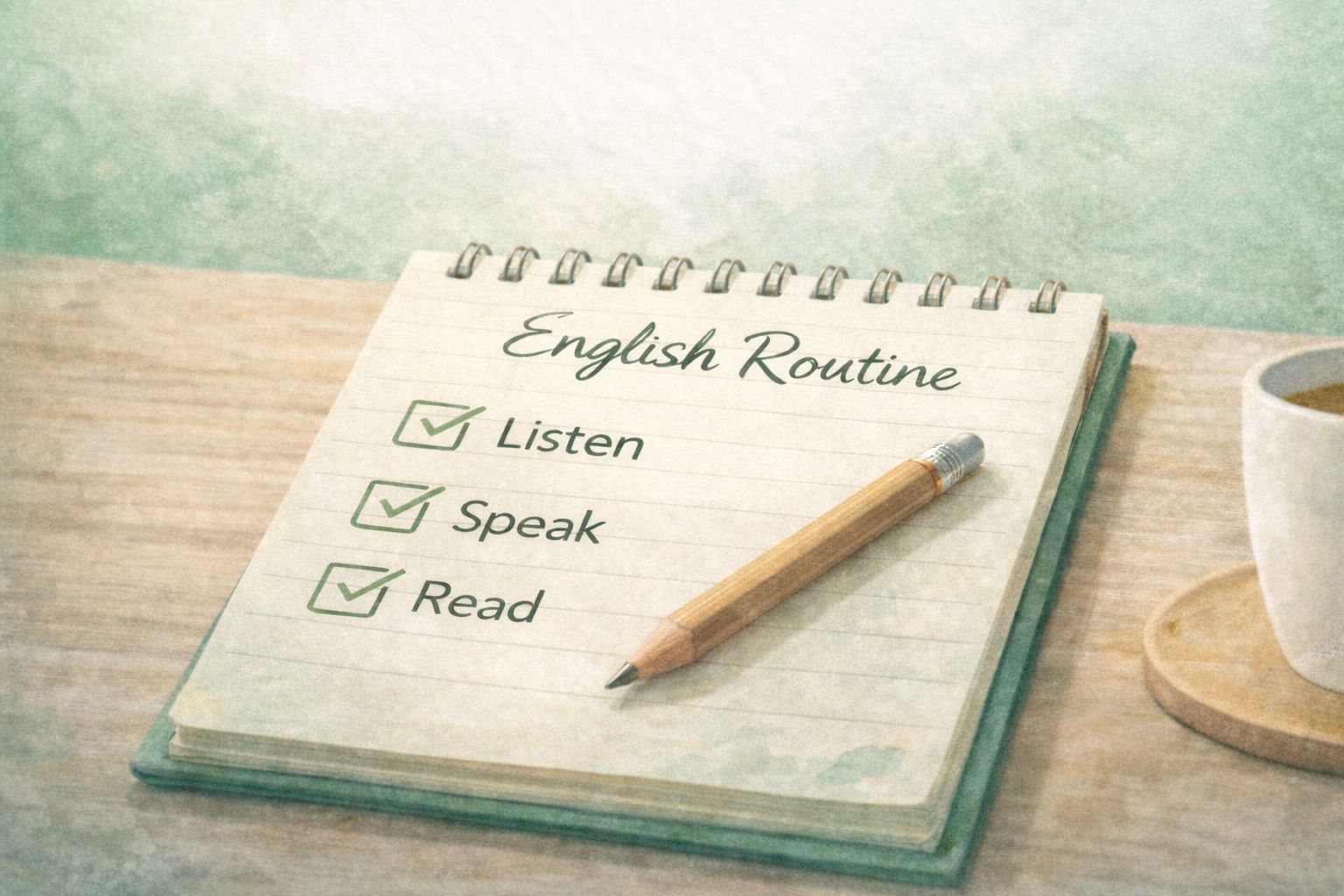
Motivation Is Nice - Routine Is Better
Motivation feels great, but it isn’t reliable. Some days you have it, some days you don’t, and that’s completely normal. The problem is that if your English depends on motivation, progress will always come and go.
Say It Differently
One of the most useful skills in speaking is the ability to explain something in another way. If you don’t know a specific word, you can describe it. For example, instead of stopping, you can:
- explain what the thing does
- describe how it looks
- use simpler words
This keeps the conversation going, which is more important than saying everything perfectly.
Use What You Already Know
It’s easy to feel stuck when you focus on the word you don’t know. But in most cases, you already have enough language to express the idea in a simpler way.
Instead of searching for the perfect word, try to say the idea using the vocabulary you already have. This is what fluent speakers do all the time.
It Gets Easier With Practice
At first, this can feel unnatural. You might pause more, search for simpler words, or feel like what you’re saying is not “good enough”. But the more you practice speaking this way, the easier it becomes.
Over time, your brain starts to react faster. You stop trying to translate perfect sentences and begin to focus more on communicating the idea. That shift makes a big difference, because speaking becomes less about being correct and more about being understood.
Keep the Conversation Moving
In real conversations, speed matters more than perfection. If you stop every time you don’t know a word, speaking will always feel difficult. But if you continue, even with simple or imperfect sentences, communication becomes much easier.
Final Thought
Not knowing a word is not a failure. It’s a normal moment in communication. The goal is not to know everything. The goal is to keep speaking, even when something is missing.
Because that is how real fluency is built.
Starling is a modern online school of English created to make language learning clear, friendly, and practical.
PIB: 113355898
MB: 66764397
Copyright © 2025 | Starlingschool | All rights reserved
Starling is a modern online school of English created to make language learning clear, friendly, and practical.
PIB: 113355898
MB: 66764397
Copyright © 2025 | Starlingschool | All rights reserved
Starling is a modern online school of English created to make language learning clear, friendly, and practical.
PIB: 113355898
MB: 66764397
Copyright © 2025 | Starlingschool | All rights reserved