
Why Speaking English Can Sometimes Feel Mentally Exhausting
Many English learners notice the same thing after speaking English for a while: they feel mentally exhausted. Even simple conversations can sometimes feel surprisingly intense, especially if they last longer than a few minutes.
This often confuses people because they assume that if speaking feels difficult or tiring, it must mean their English is not good enough. In reality, that is usually not the problem at all.
The truth is that speaking a second language requires a different kind of mental effort, particularly when the language still doesn’t feel completely automatic.
Your Brain Is Working Much Harder Than Usual
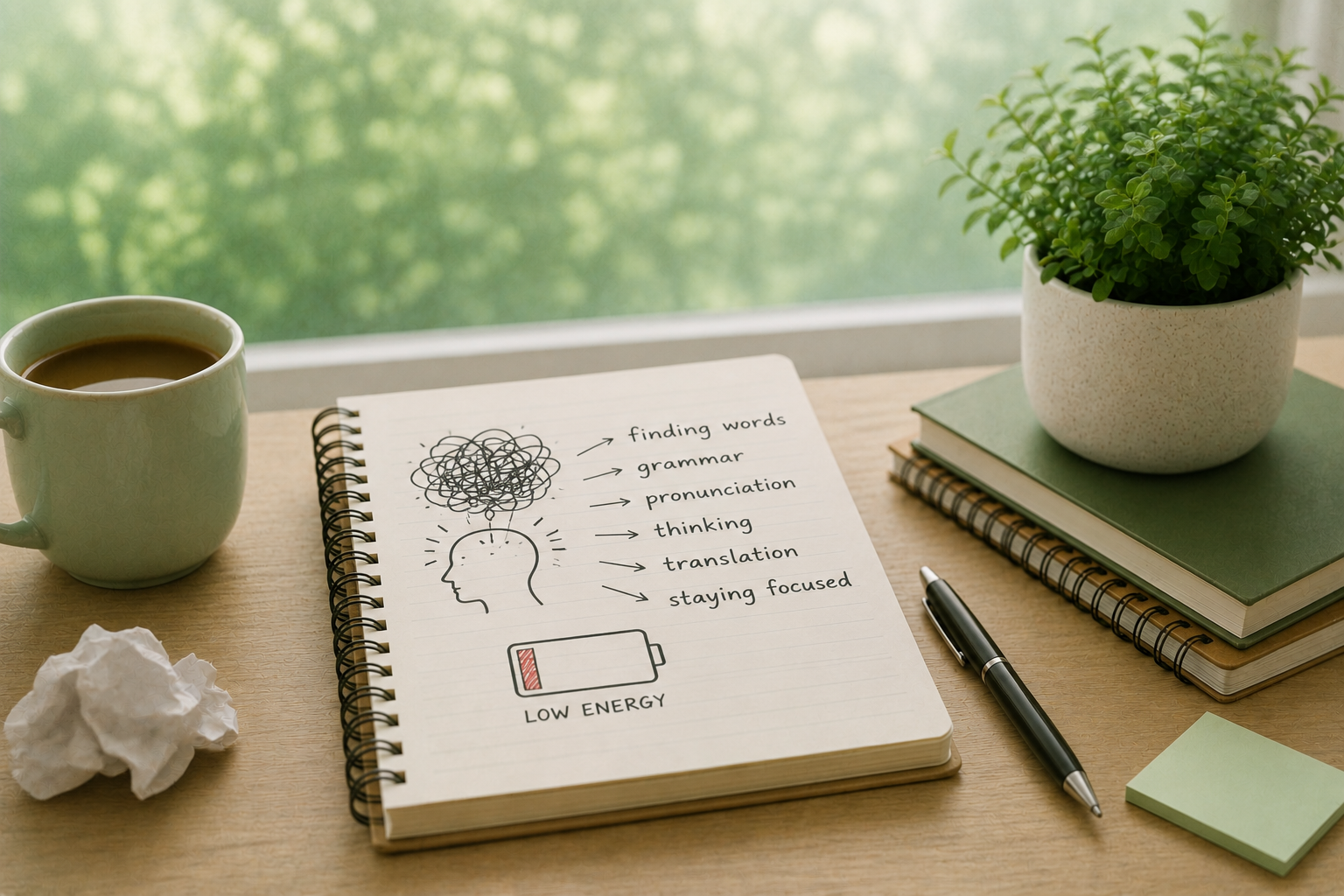
When we speak in our native language, we rarely think about the process itself. Words come naturally, sentences form automatically, and we don’t consciously pay attention to grammar or pronunciation. In English, however, learners often have to manage several things at the same time.
Most people don’t fail at learning English because they’re bad at it. They fail because they don’t know how to fit it into real life.
I’ve seen this so many times. Students start motivated and excited, ready to “finally do it properly”, and then life happens – work, kids, tired evenings, missed days. Slowly, English becomes something they feel they should do, instead of something they actually do.
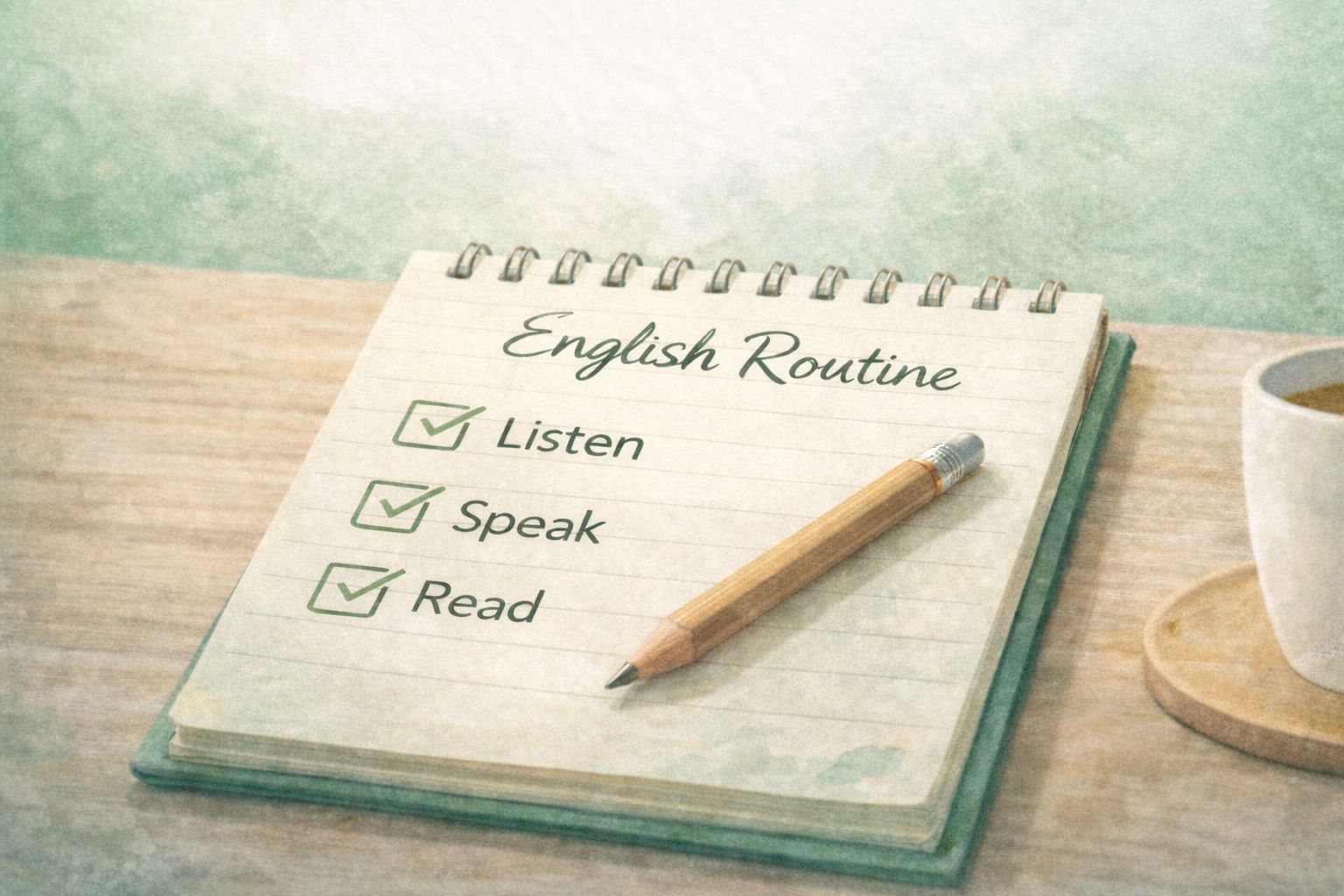
That’s where routines matter. Not strict schedules, not pressure, but something realistic that fits into everyday life.
Motivation Is Nice - Routine Is Better
Motivation feels great, but it isn’t reliable. Some days you have it, some days you don’t, and that’s completely normal. The problem is that if your English depends on motivation, progress will always come and go.
The brain is searching for vocabulary, organizing sentence structure, checking grammar, remembering pronunciation, and following the conversation, all in real time. That is a lot of activity happening at once, which is one of the reasons speaking English can sometimes feel so mentally draining, even for learners who already understand the language quite well.
Overthinking Makes Conversations More Difficult
Another thing that makes speaking exhausting is overthinking. Many learners try to prepare the “perfect” sentence before they say anything out loud. They mentally check grammar, look for better words, and worry about sounding incorrect. While they are doing all of that, the conversation continues moving forward, which creates even more pressure. After a while, speaking stops feeling natural and starts feeling more like a test.
Translation Also Takes Mental Energy
For many learners, English still involves an extra step: translation. The idea appears in the native language first, and only then does the brain begin building the sentence in English. This process may seem small, but during a longer conversation it requires a surprising amount of concentration and mental energy.
That is why speaking often feels more tiring than listening or reading. Listening allows you to recognize meaning, while speaking requires you to actively create language in real time.
It Slowly Becomes More Natural
The good news is that this feeling usually changes with practice. As certain expressions, sentence patterns, and common phrases become more familiar, the brain no longer has to work so hard to produce them. Gradually, speaking becomes more automatic, conversations feel smoother, and the mental effort becomes smaller.
This does not happen overnight, but most learners eventually notice that speaking starts to feel less stressful and more natural than it did in the beginning.
Conversations Do Not Need to Be Perfect
One of the most helpful things learners can do is accept that real conversations are rarely perfect, even between native speakers.
People pause, repeat themselves, forget words, change sentences halfway through, and make small mistakes all the time. Communication is usually much messier than learners imagine it should be.
The goal of speaking English is not perfection. The goal is to communicate clearly enough to connect with another person and continue the conversation comfortably.
Final Thought
If speaking English sometimes feels exhausting, it does not mean you are failing or incapable of becoming fluent. More often, it simply means that your brain is still actively working through the language.
With regular speaking practice, that effort slowly decreases, and communication begins to feel more natural and less overwhelming. That is a completely normal part of learning a language.
Starling is a modern online school of English created to make language learning clear, friendly, and practical.
PIB: 113355898
MB: 66764397
Copyright © 2025 | Starlingschool | All rights reserved
Starling is a modern online school of English created to make language learning clear, friendly, and practical.
PIB: 113355898
MB: 66764397
Copyright © 2025 | Starlingschool | All rights reserved
Starling is a modern online school of English created to make language learning clear, friendly, and practical.
PIB: 113355898
MB: 66764397
Copyright © 2025 | Starlingschool | All rights reserved