
Why Does Your English Sound Better in Your Head Than Out Loud?
Many English learners know this feeling very well. In your head, everything seems fine. You know what you want to say, the sentence sounds natural, and the idea feels clear. Then you open your mouth and suddenly things don’t come out the way you expected.
You hesitate. You forget a word. The sentence doesn’t sound as smooth as it did a few seconds earlier. Sometimes you even start doubting yourself and wondering whether your English is actually as good as you thought it was.
If this sounds familiar, you’re not alone. In fact, it’s one of the most common experiences language learners have, and it doesn’t necessarily mean that your English is weak.
One reason this happens is that thinking and speaking are not the same thing.
When you’re thinking silently, there is no pressure. Nobody is waiting for an answer, and you have as much time as you need to build a sentence. You can pause, change your mind, or mentally reorganize your thoughts without anyone noticing.

Most people don’t fail at learning English because they’re bad at it. They fail because they don’t know how to fit it into real life.
I’ve seen this so many times. Students start motivated and excited, ready to “finally do it properly”, and then life happens – work, kids, tired evenings, missed days. Slowly, English becomes something they feel they should do, instead of something they actually do.
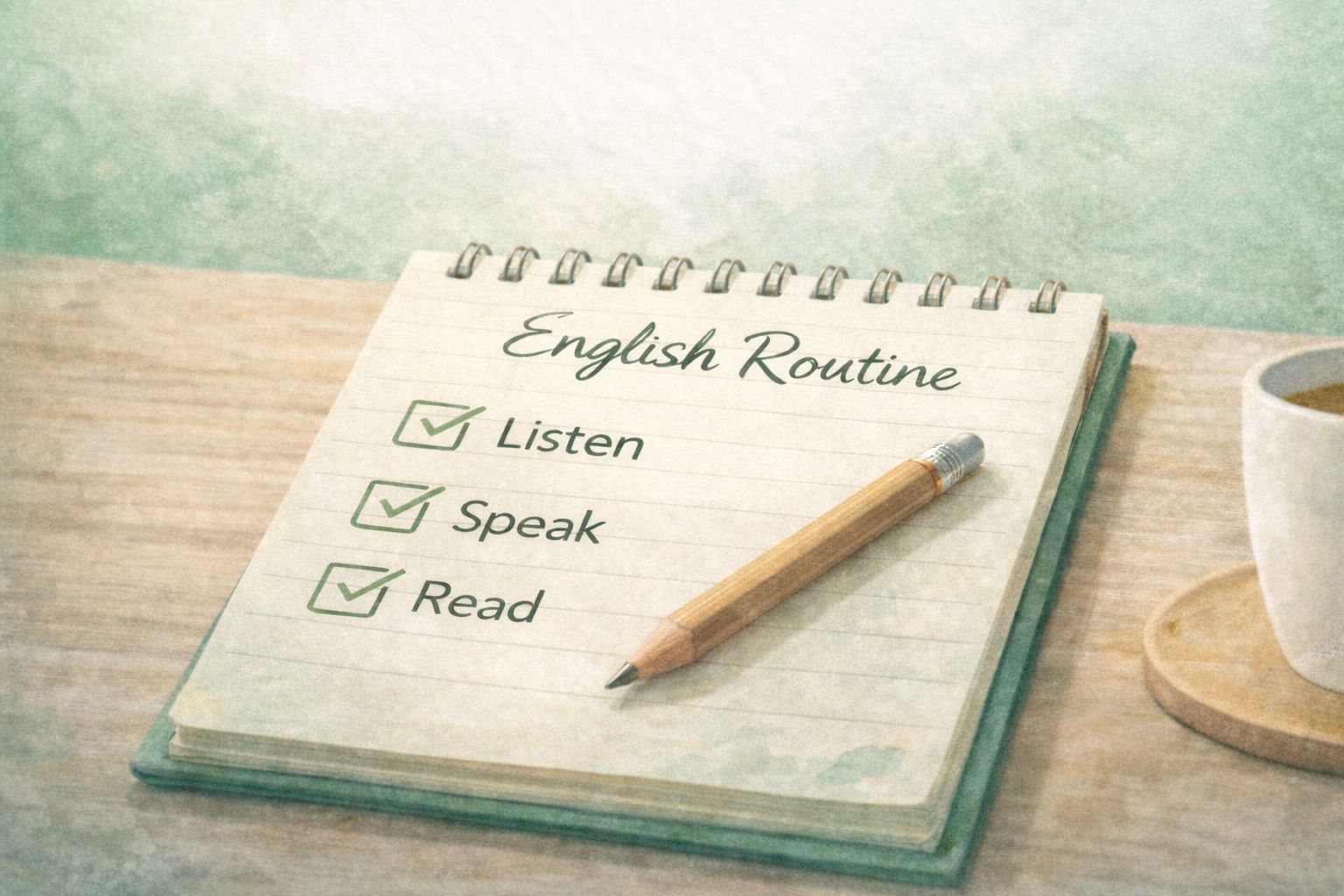
That’s where routines matter. Not strict schedules, not pressure, but something realistic that fits into everyday life.
Speaking is different. Everything happens in real time. Your brain has to find the right words, put them together, pronounce them correctly, and keep the conversation moving, often within just a few seconds.
That extra pressure makes speaking feel much more difficult than thinking, even when you already know what you want to say.
We Are Often Our Own Worst Critics
Another reason people feel disappointed when they speak is that they pay far more attention to their mistakes than anyone else does.
Learners tend to notice every hesitation, every pronunciation mistake, and every grammar error. Meanwhile, the person listening is usually focused on understanding the message, not analyzing every sentence.
Because of this, many people leave a conversation feeling that they spoke badly, even though communication was successful and the other person understood them perfectly well.
The Gap Between Knowing and Using
Many learners assume that if they know a word or a grammar structure, they should be able to use it immediately in conversation. Unfortunately, language doesn’t always work that way.
Recognizing something and producing it are different skills. You might understand a word every time you hear it, but still struggle to remember it when you need it in the middle of a conversation.
That gap can make speaking feel frustrating, but it is a completely normal part of learning a language. With enough exposure and practice, the distance between what you know and what you can actively use gradually becomes smaller.
Confidence Changes Everything
Most people notice that their English sounds much better when they are relaxed.
When we become nervous, however, we start monitoring every sentence. We think about grammar, vocabulary, pronunciation, and mistakes all at once. Instead of focusing on communication, we focus on performance.
The result is that speaking becomes slower and less natural, even though our actual level of English hasn’t changed.
Confidence doesn’t mean speaking perfectly. It simply means trusting yourself enough to continue speaking, even when mistakes happen.
Final Thought
If your English sounds better in your head than it does out loud, there is nothing unusual about that. Thinking and speaking are different skills, and speaking naturally takes more practice.
With time, regular conversation, and a little patience, the gap between the English in your head and the English you speak begins to shrink. As speaking becomes more familiar, it also becomes more comfortable.
And that is often when learners realize that their English was better than they thought all along.
Starling is a modern online school of English created to make language learning clear, friendly, and practical.
PIB: 113355898
MB: 66764397
Copyright © 2025 | Starlingschool | All rights reserved
Starling is a modern online school of English created to make language learning clear, friendly, and practical.
PIB: 113355898
MB: 66764397
Copyright © 2025 | Starlingschool | All rights reserved
Starling is a modern online school of English created to make language learning clear, friendly, and practical.
PIB: 113355898
MB: 66764397
Copyright © 2025 | Starlingschool | All rights reserved